


Is Creatine the Holy Grail of Supplements?
Every so often, the wellness world announces it has found The One: a single ingredient promising to fix your sleep, your skin, your mood and possibly your marriage, all from one scoop before breakfast. Usually the claim dissolves faster than the powder itself. Creatine, strangely, keeps refusing to.
This is odd, because creatine is not new, exotic or even vaguely glamorous. It is a compound your own liver, kidneys and pancreas already manufacture, mostly from three amino acids, and it has been sitting inside your muscles, largely unremarked upon, since long before "wellness" was a category on Instagram. Calling it a holy grail is a lot of pressure to put on something your body has been making unassisted for its entire existence.
So, before we decide whether creatine deserves the title, let’s look at what it actually does.
Three creatine facts:
- 🧪 Produced naturally by the liver, kidneys and pancreas
- 🥩 Found in modest amounts in red meat and fish, harder to get if you eat neither
- ⚡ Used by cells to regenerate ATP, the molecule that helps power short, forceful bursts of effort.
That last point is where the story gets interesting, because "short, forceful effort" turns out to cover more than deadlifts.
Why creatine left the gym
A 2024 study using brain imaging found that a single high dose of creatine measurably improved word memory, processing speed and reaction time in sleep-deprived adults, alongside detectable shifts in the brain’s own energy reserves.1
Not muscle tissue. Brain tissue. That distinction is largely why creatine has drifted out of protein-shaker culture and into parenting forums, perimenopause panels and the sort of algorithm-fed corners of the internet where people compare supplement stacks like other people compare book club picks.
 Creatine for women: the bit worth noticing
Women tend to synthesise creatine at lower rates than men and, on average, consume less of it dietarily, given that its richest sources are meat and fish.2
A 2025 research review tracing creatine’s role from the menstrual cycle through to menopause flagged particular relevance around perimenopause, a stretch of life in which sleep, bone density, muscle mass and mental clarity all tend to renegotiate their terms at once.2
The reviewers make the case that, across most life stages, the balance of evidence leans in favour of supplementation rather than against it, which is not a sentence supplement research hands out lightly.
Is creatine bad for your kidneys?
Every creatine article is ethically obliged to address this, so here it is.
The worry stems from a real but often misread fact: creatine breaks down into creatinine, the marker doctors use to estimate kidney function, so levels can tick up slightly on a blood test. That is expected, not evidence of harm.
- ❌ Myth: Creatine strains healthy kidneys over time
- ✅ Evidence: After reviewing decades of research, the International Society of Sports Nutrition found no evidence that creatine supplementation damages kidney function in healthy adults.3
Few sports supplements have been studied this thoroughly, and fewer still have held up quite this well under the scrutiny.
 What's in Neutrient Advanced Creatine
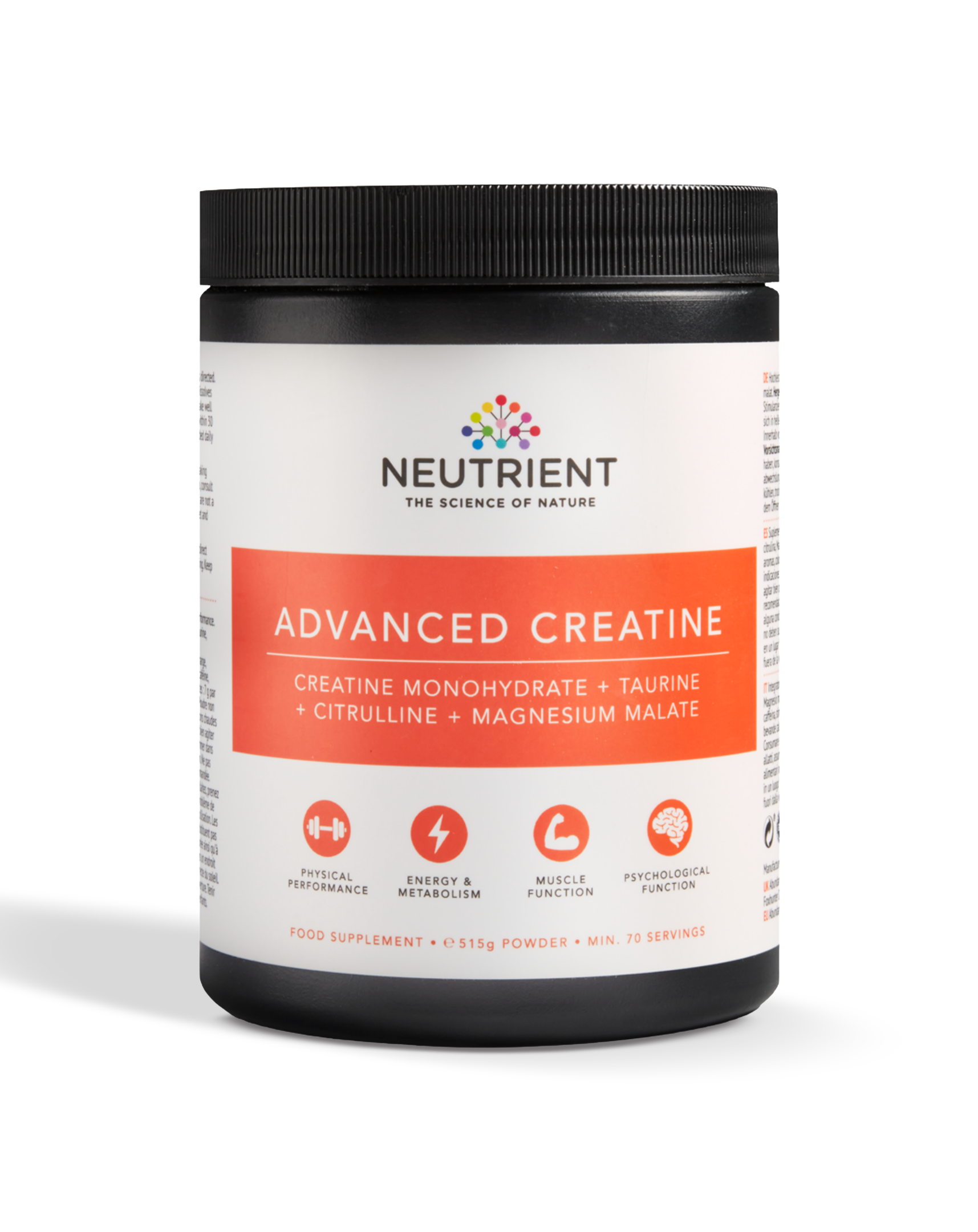
Most creatine on the shelf is exactly one ingredient. Neutrient Advanced Creatine isn’t. It pairs 5g of creatine monohydrate with three supporting ingredients in each unflavoured scoop:
- 💪 Creatine monohydrate: 5g
- 🩸 Citrulline malate: 1g, generally studied alongside exercise-related blood flow
- ⚡ Taurine: 1g, an amino acid-like compound involved in muscle function, cellular hydration and electrolyte balance
- 🧂 Magnesium malate: 200mg, contributing to normal muscle and nervous system function
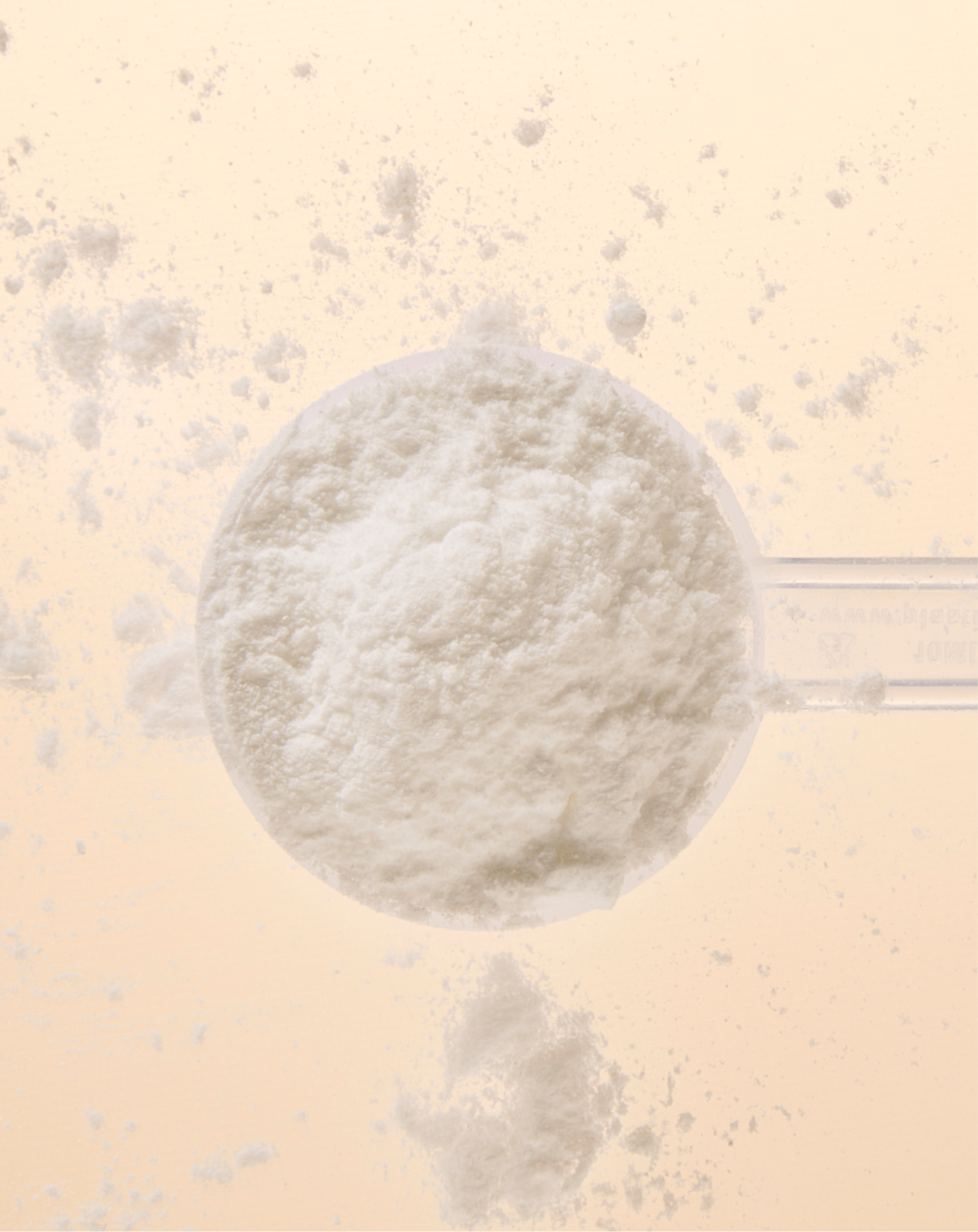
There’s nothing else in the tub. No stimulants, no sweeteners, no flavourings, no animal-derived ingredients, just a fine, genuinely non-gritty powder that dissolves into coffee, a smoothie or plain water without making a fuss. Vegan by design rather than as an afterthought, and designed to fit easily into an existing routine.
[Space reserved for a quote from Alex Mills or a comparable sports/nutrition expert here, for example their perspective on why creatine has earned a permanent place in serious training programmes, or what they’d say to someone trying it for the first time.]
 So, is creatine the holy grail?
Almost certainly not, if the phrase implies a shortcut. Creatine won’t replace a good night’s sleep, invent motivation you don’t have, or substitute for training you skipped.
What the evidence does support is considerably less dramatic and, honestly, more useful: a thoroughly studied compound your body already relies on, simply topped up on purpose rather than left to whatever your last meal happened to contain.
Whether that earns the grail title is, fittingly, a decision best made with one organ creatine has lately been caught flirting with. Your own, reasonably well-fuelled, brain.
FAQs
Will creatine make me bloated?
A little water does move into your muscle cells; that is partly the point. The puffy-creatine legend is more likely to appear with enthusiastic loading doses, not a steady everyday scoop. At 3–5g a day, many people notice very little.
Does creatine cause hair loss?
This one mostly traces back to a 2009 study in rugby players, which found a rise in DHT, a hormone linked to hair loss, but did not actually measure hair loss. Since then, the idea has not been convincingly replicated. For now, it remains a rumour with excellent public relations.
Do I need a loading phase?
Only if you are impatient. A loading phase, usually around 20g a day for five to seven days, gets muscle stores topped up faster. A simple 3–5g daily dose gets you broadly to the same place within a few weeks. Creatine is a long-term relationship, not a first date.
Can I take creatine with coffee?
The idea that caffeine cancels creatine comes from older, small studies; everything since has been rather more forgiving. If coffee is the habit that helps you remember your scoop, it is a perfectly respectable delivery system. The best supplement routine is usually the one you actually remember to follow.
Written by: Jacqueline Newson BSc (Hons) Nutritional Therapy
References
- Gordji-Nejad A, Matusch A, Kleedörfer S, Patel HJ, Drzezga A, Elmenhorst D, Binkofski F, Bauer A. Single dose creatine improves cognitive performance and induces changes in cerebral high energy phosphates during sleep deprivation. Scientific Reports. 2024;14:4937.
- Smith-Ryan AE, et al. Creatine in women’s health: bridging the gap from menstruation through pregnancy to menopause. Journal of the International Society of Sports Nutrition. 2025.
- Kreider RB, Kalman DS, Antonio J, Ziegenfuss TN, Wildman R, Collins R, Candow DG, Kleiner SM, Almada AL, Lopez HL. International Society of Sports Nutrition position stand: safety and efficacy of creatine supplementation in exercise, sport, and medicine. Journal of the International Society of Sports Nutrition. 2017;14:18.
Read more

One supports the structure. The other supports the function. Together, they make a smart September pairing. The easiest habit you'll add this month The best supplement routine is the one you actual...

Creatine is one of the most researched supplements in sports nutrition. Once mainly used by strength athletes and bodybuilders, it is now recommended by sports nutritionists, functional medicine pr...